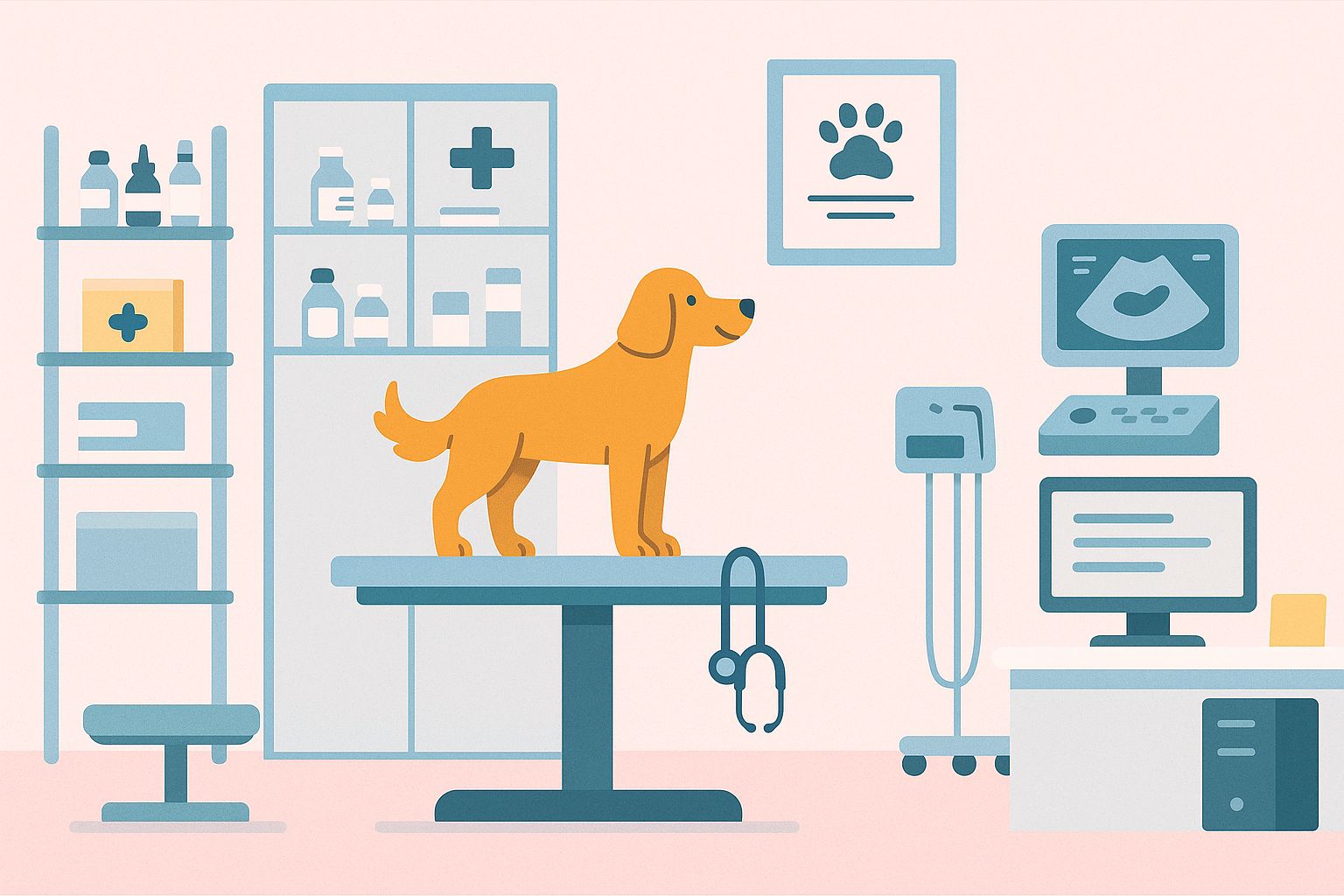
What equipment do you really need? What can wait? How much space should you plan for?
This guide breaks down the must-have infrastructure and equipment for a new (or expanding) clinic in India; with a practical, phased approach to help you invest smartly without compromising care.
1. Reception & Record-Keeping Area
Your reception is the clinic's first impression and the epicenter of all operations.
Essential Setup
- ●A sturdy reception desk
- ●Comfortable seating for 4-10 people
- ●Computer/laptop with clinic software (like Koko)
- ●Printer + basic stationery
- ●Water dispenser / small refreshments
- ●Shelves or drawers for consumables
Why It Matters
A welcoming reception reduces anxiety for pet parents and sets a calm tone before the consultation even begins.
2. Consultation Room
This is where 80% of your clinical work happens.
Must-Have Equipment
- ●Examination table (stainless steel or hydraulic)
- ●Stethoscope & thermometer
- ●Otoscope & ophthalmoscope
- ●Weighing scale (preferably digital)
- ●Syringes, needles, gloves
- ●Muzzles, soft restraints
- ●Sharps disposal container
- ●Non-slip mat for anxious pets
Space Consideration
A 10×12 ft room works well for most clinics. Ensure good lighting and ventilation.
3. Treatment / Minor Procedure Area
If you plan to perform injections, dressing, or minor procedures, dedicate a clean corner or small room.
Equipment List
- ●IV stands + catheters
- ●Dressing material
- ●Clippers & antiseptic scrubs
- ●Bandages, tapes, gauze
- ●Fluid therapy supplies
- ●Basic surgical instruments (hemostats, scissors, forceps)
- ●Autoclave/sterilizer (tabletop)
Optional Upgrades
- ●Oxygen concentrator
- ●Suction machine
4. In-House Laboratory (Optional but Valuable)
You can start without a lab, but adding one later can significantly boost your diagnostic capability.
Basic Lab Equipment
- ●Microscope
- ●Centrifuge
- ●Hematology analyzer
- ●Biochemistry analyzer
- ●Urine analyzer
- ●Refrigerator for samples
5. Imaging Area
Not necessary at launch but if you plan to invest:
Options
- ●X-ray unit (CR or DR)
- ●Ultrasound machine
These are high-ROI items for clinics in growing neighborhoods.
6. Pharmacy & Product Shelves
A well-organized pharmacy builds trust and reduces dependency on external shops.
Must-Haves
- ●Lockable medicine cabinet
- ●Refrigerator for vaccines
- ●Shelves for supplements & pet products
- ●Clear expiry date tracking (Koko helps automate this)
Many clinics today also offer home delivery of medicines using Koko's integration with delivery partners like Porter.
7. Inpatient / Boarding (Optional)
If you have the space and patient load:
Requirements
- ●Stainless-steel cages
- ●Easy-to-clean flooring
- ●Separate isolation area
- ●Feeding bowls, litter trays
- ●Proper ventilation
8. Clinic Design & Comfort
A good clinic "feels" comforting even before treatment begins.
Invest in:
- ●Soft pastel colors
- ●Plants & natural light
- ●Non-slip flooring
- ●Air purification for odor control
- ●Pet-friendly seating distances
Your space should feel safe for both pets and parents. Read more in our blog Designing a Pet & Parent-Friendly Veterinary Clinic.
🧠 Vet's Corner Tip
"You don't need to buy everything on Day 1. Start with essentials, build trust, and expand as your clinic grows."
FAQs
1. What basic equipment do I need to start a veterinary clinic in India?
You need an exam table, weighing scale, stethoscope, thermometer, basic surgical instruments, dressing supplies, a computer with veterinary software like Koko, and a small pharmacy setup.
2. How much space is ideal for a veterinary clinic?
A functional clinic can start with 300–500 sq. ft., including reception + consultation + small treatment area. Expand as your patient base grows.
3. Do I need an X-ray or ultrasound machine from Day 1?
Not necessarily. Many new clinics start without imaging and add it later once revenue stabilizes.
4. What software should I use for record-keeping?
Cloud-based systems like Koko help manage appointments, reminders, medical records, billing, and inventory from Day 1.
5. How can I manage expiring medicines easily?
Use software with expiry tracking, alerts, and automated reports. Koko offers this out of the box.
How Koko Helps
Once your clinic is set up, keeping it organized and efficient is key. Koko helps you manage:
- ✔Appointments
- ✔Billing
- ✔Medical records
- ✔Vaccination reminders
- ✔Lab reports
- ✔Inventory & expiry tracking
- ✔Home-delivery
Ready to Modernize Your Clinic?
Discover how Koko can streamline your operations and enhance pet care.
Schedule a Free Demo