Count your empty slots from last week. Not the gaps you never filled, the ones that were booked and simply didn't happen. The pet parent who confirmed Tuesday 6 PM and never came. The follow-up that was "definitely coming at 11" and called at 4 to reschedule. For most Indian vet clinics running 150 to 250 appointments a month, that's 12 to 20% of the book: 20 to 40 slots, gone.
A no-show is the most expensive kind of lost revenue because you paid for it twice. The doctor's time was reserved either way, and the slot could have gone to a pet parent who actually needed it. This article covers what actually brings the number down, in the order you should implement it.
What a no-show really costs
Keep the math conservative. Say your average appointment bills ₹500 in consultation, and a typical visit carries another ₹300 to 500 in medicines, food, or preventives bought at the counter. Call it ₹800 to 1,000 per visit.
- 30 no-shows a month × ₹800 = ₹24,000 a month in direct loss
- Plus the pets that fell out of treatment because a follow-up never happened, which shows up later as churn
- Plus the scheduling chaos: a no-show at 11 AM and a walk-in rush at 6 PM is how doctors end up staying late on a "quiet" day
This sits alongside the other leaks we covered in the 5 places your vet clinic is quietly losing revenue. The good news: no-shows respond faster to fixes than almost any other leak. Clinics that implement the steps below typically recover 15 to 20% of what was slipping within the first month.
Why pet parents no-show (it's not disrespect)
Before fixing it, understand it. Almost no one skips an appointment to spite you. The real reasons, in rough order of frequency:
- They forgot. The appointment was made 5 days ago in a 30-second phone call. Nothing ever reminded them.
- The booking never felt real. "Haan, Tuesday shaam ko le aana" on WhatsApp is not an appointment, it's a vague intention. Informal bookings produce informal attendance.
- Life happened and rescheduling felt like a hassle. If cancelling means calling a busy clinic number, many people just... don't.
- First-time clients comparison-shop. They booked with you and one other clinic, then picked one. If you don't know which bookings are first-timers, you can't see this happening.
Every fix below attacks one of these causes directly.
Fix 1: The two-touch reminder (24 hours + day-of)
This is the highest-return change, and it's fully automatable. Two messages per appointment, on WhatsApp, where Indian pet parents actually look:
- 24 hours before: "Hi! This is a reminder that Simba has an appointment at [Clinic] tomorrow, Tuesday, at 6:00 PM with Dr. Sharma. Reply YES to confirm or call us to reschedule."
- Morning of the visit: "See you today at 6:00 PM for Simba's check-up! Location: [map link]."
Three details make this work. Use the pet's name, because "reminder for your appointment" is ignorable and "reminder for Simba" is not. Ask for a reply, because a pet parent who typed YES has mentally committed, and one who didn't just flagged themselves for a phone call. And send it every time, automatically, because the version of this that depends on the front desk remembering during a busy evening dies within two weeks.
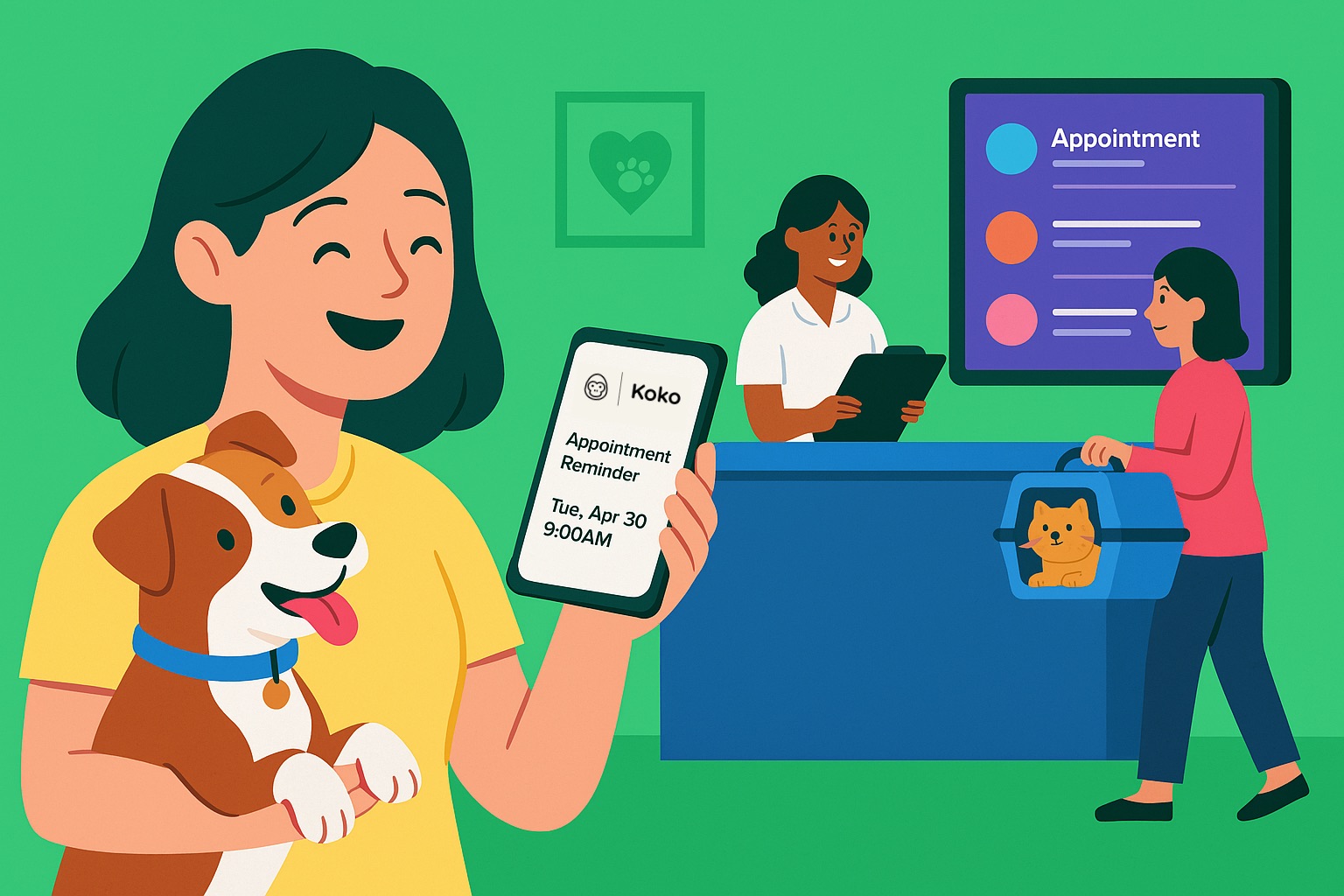
This is exactly what Koko's appointment tracking does out of the box: every booking gets its confirmation and reminders on WhatsApp without anyone at the clinic touching it, the same way vaccination reminders run on autopilot.
Fix 2: Call first-time clients personally
New clients no-show at roughly double the rate of existing ones. They have no relationship with you yet, and some are still deciding between two clinics. A 60-second call the evening before changes that:
"Hi, this is [name] from [Clinic]. Dr. Sharma is looking forward to seeing Bruno tomorrow at 11. Is there anything we should know before the visit?"
That call does three things at once: it makes the booking feel real, it starts the relationship before the visit, and it surfaces the "actually, we might not make it" answers a message never gets. Reserve this for first-timers and high-value bookings; the automated flow covers everyone else. Your appointment list needs to show who's new for this to work, which is a filter, not a memory exercise.
Fix 3: Deposits for high-value slots
For long slots that block serious calendar time, a small advance changes behaviour completely. Grooming sessions, dental cleanings, minor procedures, new-puppy full check-ups: these are the bookings where a no-show costs you an hour, not fifteen minutes.
The policy that works in practice:
- Take a ₹200 to 500 advance via UPI at booking, adjusted fully against the bill
- Frame it as slot reservation, not a penalty: "We reserve the full hour for Bruno, so we take a small advance that's adjusted in the bill"
- Make it fully refundable with 24 hours' notice, so the honest reschedulers never feel punished
Most clinic owners hesitate here, expecting pushback. In practice pet parents accept it the way they accept it at salons and diagnostic labs. The people who refuse a ₹300 refundable advance were the likeliest no-shows on your list. Don't apply it to regular consults; the friction isn't worth it there.
Fix 4: Make rescheduling easier than vanishing
Every no-show you've ever had would rather have rescheduled, if rescheduling took ten seconds. So put a reschedule path inside every reminder: "Reply RESCHEDULE or tap here to pick a new time." A rescheduled appointment keeps the revenue and the treatment plan alive; a silent no-show loses both, and often the client with it.
Then build the calendar to absorb the hits that still happen:
- Don't book back-to-back across the whole day. Keep one buffer slot late morning and one in the evening rush. A cancelled slot becomes breathing room; an emergency walk-in gets absorbed without wrecking the schedule.
- Keep a same-day waitlist. Two or three pet parents who asked for "anything today" fill a cancelled slot with one message.
Measure it, or it un-fixes itself
Track one number monthly: booked appointments that didn't happen, as a percentage. Under 8% is healthy with reminders running; over 15% means the flow has broken somewhere, usually because bookings are being taken outside the system again, in a notebook or a personal WhatsApp chat that the reminders never see.
That's the underlying rule of everything in this article: an appointment that isn't in the system can't be confirmed, reminded, rescheduled, or counted. Structured scheduling isn't bureaucracy; it's the thing that makes every fix above run without anyone remembering to do it. And no-shows are only half the attendance problem: the pets that stop coming back altogether are the other half, covered in why vet clinics lose patients between visits.
Frequently asked questions
What is a normal no-show rate for a veterinary clinic?
Without reminders, Indian clinics commonly sit at 12 to 20%. With automated WhatsApp confirmations and reminders running consistently, well-run clinics get under 8%. Zero isn't realistic; pets fall sick, plans change.
Should I charge a cancellation fee?
For regular consultations, no; the goodwill cost outweighs the recovery. For long, high-value slots like grooming, dentals, and procedures, a small refundable advance works better than a fee: it prevents the no-show instead of billing for it after.
Do WhatsApp reminders actually work better than SMS or calls?
In India, yes. WhatsApp open rates are far higher than SMS, and unlike a call, a message doesn't depend on the pet parent being free at that moment. The strongest combination is automated WhatsApp for everyone plus a personal call for first-time clients and procedure bookings.
How far in advance should appointment reminders go out?
Two touches: one 24 hours before, when there's still time to reschedule the slot to someone else, and one on the morning of the visit. Reminders sent only an hour before confirm attendance but recover nothing when the answer is no.
Can I do all this manually without software?
For a while, yes: a diary, a daily reminder-sending routine, and discipline. It typically survives until the first truly busy week, because it depends on a person remembering during exactly the hours they're busiest. Practice management software like Koko exists to make the reminders, confirmations, and waitlist run automatically whether the front desk had a calm day or a chaotic one.
Want to see your clinic's no-show rate drop next month? Book a free Koko walkthrough and we'll set up the reminder flow live on the call.
Ready to Modernize Your Clinic?
Discover how Koko can streamline your operations and enhance pet care.
Schedule a Free Demo