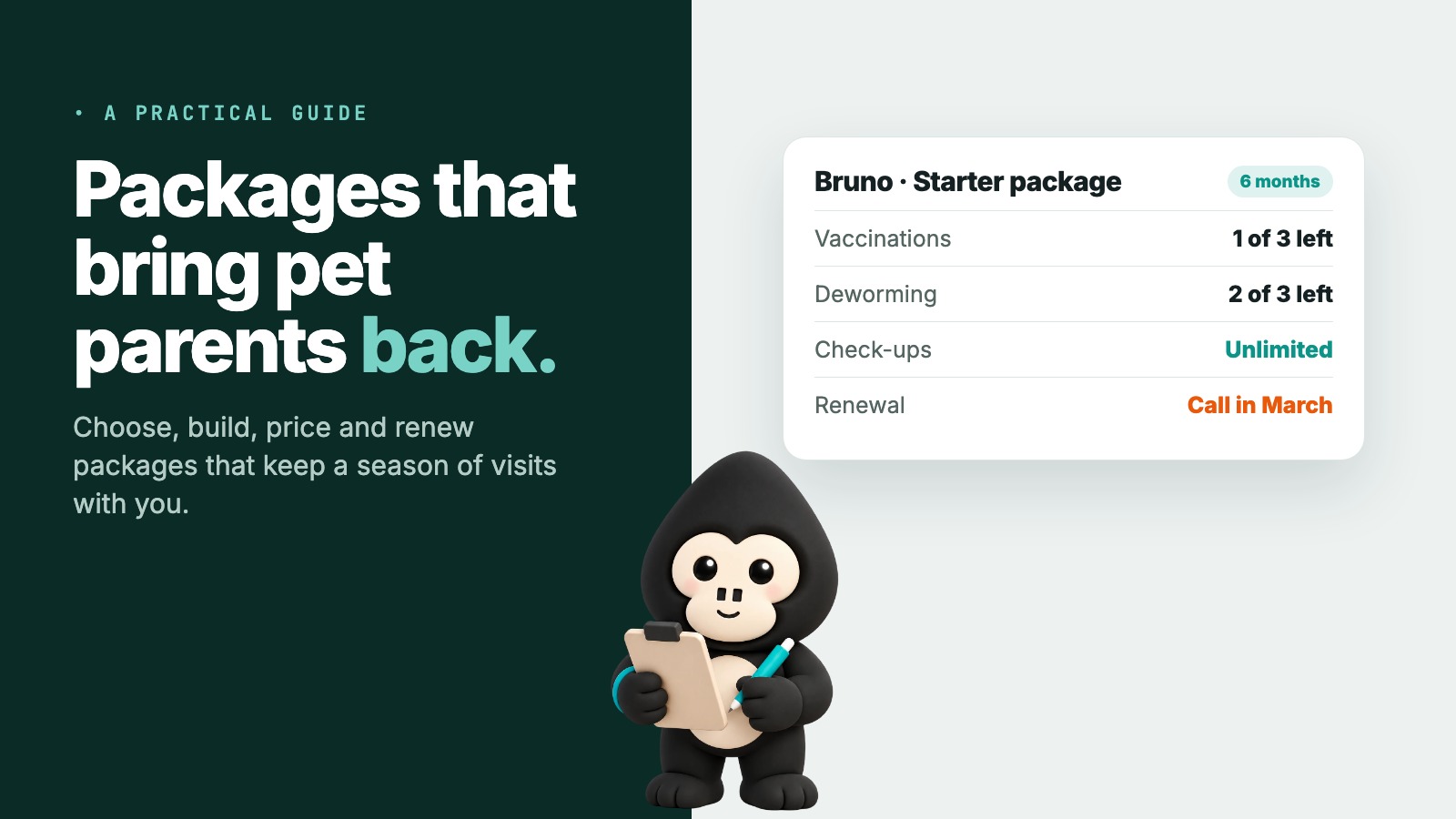
A puppy that comes to you for its first vaccine will need several more visits over the next few months: the rest of the vaccination course, deworming, a check-up or two. Whether those visits happen at your clinic is less certain than it looks. Pet parents rarely leave a clinic because of one bad visit. More often they drift. The next booster happens wherever is closest that Sunday, and the check-up after that at a new place across town.
A package is one of the simplest ways to keep those visits with you. The pet parent pays once, up front, for a season of care, and coming back to your clinic becomes the easy choice. This guide covers how to choose your first packages, what to put in them, how to price and offer them, and how to get pet parents to renew.
Why packages work for retention
A package doesn't create visits the pet wasn't going to need. It decides where those visits happen. Once a pet parent has paid you for the vaccination course, the next dose is already yours. You don't have to win it again.
Packages also change the conversation at the front desk. Without one, every visit is a fresh bill. With one, the visit is part of a plan the pet parent has already agreed to, and your team can spend the time on the pet instead of the price.
The goal is simple: give your regular pet parents a reason to keep coming back, season after season.
Start with the moments that begin a relationship
The packages that sell best match a moment when a pet parent is already thinking about the months ahead. Four moments work well for most clinics.
1. A new puppy or kitten
The first vaccine visit is the moment a pet parent is most open to a plan. A starter package covers the vaccination course as your clinic gives it, deworming for the same period, and a few check-ups. Six months is a natural length, because that's roughly how long the early course takes.
2. Healthy adult pets
For pets that only come in once or twice a year, an annual care plan works better than a course of visits. It can include unlimited consultations, so a pet parent never hesitates to bring the pet in for a small worry, plus a discount on things they buy anyway, such as lab tests or food. This one is less about counting visits and more about making your clinic the first call.
3. Grooming regulars
If some pet parents already come every month for a bath, a grooming plan turns that habit into a year's commitment: a set number of baths over twelve months, with a consultation alongside each if you like. List what is not included, such as haircuts or medicated baths, so nobody is surprised.
4. Senior pets
Older pets need more regular attention, and their parents often worry about what each visit will cost. A senior wellness package can bundle a few check-ups, a yearly blood panel and a set price for a procedure like dental cleaning. It gives the pet parent a clear plan for the year and gives you a reason to see the pet before small problems become big ones.
Start with one or two of these, not all four. You can add more once your team is comfortable offering them.
How to build a package that sells
- Include only what they'd come for anyway. A package built around the visits a pet already needs feels like good sense. One stuffed with extras feels like a sales pitch.
- Match the length to the course. Six months for a puppy or kitten starter, twelve months for annual and senior plans. A package that runs out before the course ends causes friction; one that runs far past it gets forgotten.
- Count the costly items, keep the cheap ones open. Vaccines, baths and blood tests should have a set number. Consultations can be unlimited, because an extra visit costs you little and brings the pet in.
- One pet per package. It keeps the record clear and avoids arguments about which pet used what.
- Write the terms in three lines. Which pet it's for, how long it lasts, and that unused items are not refunded or moved to another pet. Short terms get read; long ones don't.
How to price it
Pricing is your call, and it depends on your costs and your pet parents. A simple way to work it out:
- Add up the list value. What would the pet parent pay for everything in the package, visit by visit, at your normal prices?
- Decide the saving. Pick a saving the pet parent will notice and you're still comfortable giving. The package is earning you the visits; it doesn't need to be your biggest discount.
- Round to a simple number. A clean price is easier to say at the front desk and easier to remember.
For example, if a starter package lists at ₹9,000 visit by visit, a clinic might price it at ₹7,499. The pet parent sees the saving, and the clinic has six months of visits already booked. Your numbers will be different. The method is the same.
Two things to avoid: discounting items that are already cheap, where the saving barely shows, and making expensive procedures unlimited, where one heavy user can cost you more than the package earns.
When and how to offer it
A package offered at the right moment sounds like advice. Offered at the wrong one, it sounds like an upsell. The best moments are:
- The first vaccine visit of a puppy or kitten.
- A new adoption, when the pet parent is asking what the pet will need.
- A senior diagnosis, such as early arthritis or a heart murmur, when regular check-ups matter.
- A regular grooming client who has come three or four months in a row.
The order matters too. The vet recommends; the front desk closes. A pet parent trusts the vet's advice on what the pet needs. The front desk then explains the package and the price. Two lines that work:
- Vet: "Bruno needs two more vaccines and regular deworming over the next few months. We have a starter plan that covers all of it."
- Front desk: "The starter plan covers his vaccines, deworming and check-ups for six months, for one price today. You won't be billed for those visits again."
Keep it to one package per conversation. Two options at most. A long menu slows the decision down.
Running it without extra work
The fastest way to lose a pet parent's trust is to forget what they've already paid for. Every visit, your team should know what the pet has left without searching for a receipt or asking the pet parent.
Keep the count on the pet's record, not on paper or in someone's memory. When a pet parent sees "two deworming visits left" on the bill, it reassures them the package is working, and it reminds them to come back for the rest.
Use each visit for care, not for selling. The package has already been sold. What keeps the pet parent for next season is how well the pet is looked after this season.
Renewals: where retention is won
Selling the first package is the easy part. Retention shows up at renewal.
- Start 30 days before it ends. Make a list each week of the packages ending in the next month and call those pet parents. A call before it runs out feels like care. A call after it lapses feels like chasing.
- Offer the next stage, not the same thing again. A puppy finishing its starter package is ready for an annual care plan. A grooming plan can renew as it is.
- Watch your renewal rate every month. Of the packages that ended, how many pet parents bought another? If the number drops, look at the calls first: were they made, and in time?
Mistakes to avoid
- Too many packages. If your team can't explain each one in a sentence, there are too many.
- Packages for one-off procedures. A spay or a surgery isn't a relationship. Keep packages for care that repeats.
- Deep discounts. A package that loses money on every visit costs you more than it keeps.
- Unlimited costly items. Count anything expensive.
- Vague terms. "Valid for one year" without saying from when, or for which pet, leads to arguments at the desk.
- Selling without the vet. A package pushed at the counter without a vet's recommendation feels like a sale, and pet parents can tell.
Your first month: a checklist
- Pick two packages to start with, usually a puppy or kitten starter and one annual plan.
- Write each package's contents, length and three lines of terms.
- Brief your vets and front desk on when to offer them and what to say.
- Offer the starter package at every first vaccine visit for a month.
- At month end, look at how many you sold and which conversations worked.
- Put renewal calls on the calendar from the start.
How Koko helps
On Koko, a clinic sets up a package once and sells it at checkout. After that, Koko applies the package on every visit by itself, and the bill shows what's left. Pets with a package nearing its end show as Renewal due in your pet list, so your team knows who to call, and Insights shows your renewal rate.
Our short video shows a package from the first day to renewal: Packages that bring pet parents back. Want to set up your first package? Book a free demo.
Frequently asked questions
Should every clinic offer packages?
Packages help most where pets need repeat visits: vaccination courses, grooming, senior care. A clinic that mostly sees one-off emergencies will get less from them.
How many packages should we start with?
One or two. A puppy or kitten starter and one annual plan cover most pet parents. Add more once your team offers them comfortably.
What if a pet parent doesn't use everything in the package?
Say so in the terms: unused items are not refunded or moved to another pet. The renewal call is a good time to remind them what's left before it ends.
Can a package be shared between two pets?
It's simpler to keep one package per pet. It keeps the record clear and avoids disputes about who used what.
Ready to Modernize Your Clinic?
Discover how Koko can streamline your operations and enhance pet care.
Schedule a Free Demo