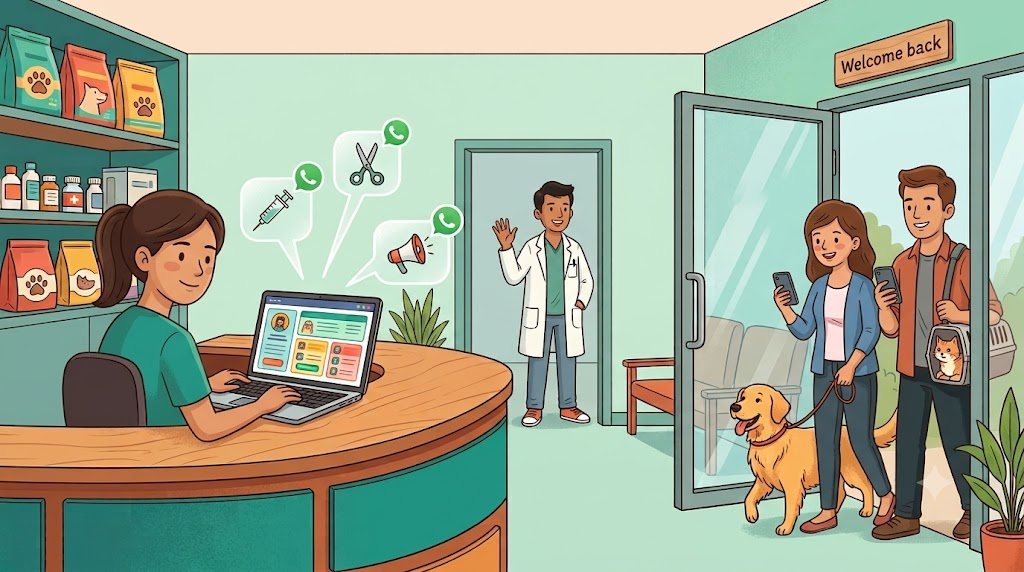
Every established vet clinic has a list it has never looked at: pet parents who used to come in regularly and then quietly stopped. No complaint, no goodbye. They moved to a groomer closer to home, started ordering medicines online, or simply fell out of the habit. Because they never told you they left, they don't show up anywhere, and your appointment book still looks busy.
These pet parents are the cheapest appointments you will ever win. They already know your clinic, they trust your doctors, and their pets' history is already in your records. They don't need to be convinced; they need to be reminded, with the right message, at the right time.
This playbook covers how to find them, the seven campaigns clinics run most often, and how to write messages that get a reply instead of a block.
Why win-back beats new-patient marketing
Getting a new pet parent through the door means ads, Google reviews, and a first visit where trust still has to be built. Winning back a lapsed one takes a single well-timed WhatsApp message.
The maths is simple even with conservative numbers. Say your records hold 150 pet parents who visited three or more times and haven't been back in six months. If a targeted message brings back just 10% of them, and each visit bills ₹800 with medicines and preventives, that's ₹12,000 from one message, and those pet parents are now back in your reminder cycle for next year too. (These figures are illustrative; your own records will give you the real ones.)
Clinics running this on Koko have seen it work in practice:
A campaign to pet parents who hadn't booked grooming in months brought in 3 appointments at a 5x return on what the campaign cost to send.
A campaign to pets overdue for vaccination brought in 12 appointments at a 20x return.
The reason it works is precision. A broadcast to your whole contact list is noise. A message to the exact twenty pet parents it applies to feels like the clinic is paying attention.
Step 1: Build the right audience
The whole playbook rests on picking the right people. Koko's Campaigns feature lets you build an audience from the data already in your clinic's records, combining filters such as:
Species: dogs, cats, or both
Age: puppies and kittens, adults, or seniors
Gender and neuter status
Last visit date: for example, no visit in the last 6 months
Services billed: who has, or hasn't, had grooming, a vaccination, or a dental cleaning
Products billed: who buys a particular food, dewormer, or tick-and-flea product
Lab tests billed: who has had blood work done, and when
Combining two or three filters is where it gets powerful. "Dogs, last grooming billed more than 3 months ago" is a list of people who are probably due. "Everyone in my records" is a list of people who will ignore you.
Step 2: Pick the campaign
These are the seven campaigns clinics run most often, each with the audience that makes it work.
1. The grooming win-back
Audience: dogs whose last grooming service was billed more than 3 months ago.
Grooming is the most habit-driven service a clinic offers, and the easiest to lose to a groomer down the road. A friendly nudge with a pet's name and a simple booking link brings a surprising number back. This is the campaign that delivered the 5x return above.
2. The vaccination-overdue recall
Audience: pets with a vaccination billed more than a year ago and no visit since.
Automatic reminders handle pets as they come due. This campaign catches the ones who slipped through: pet parents who ignored the reminder, changed numbers, or joined before reminders were switched on. It's the campaign that brought 12 appointments at a 20x return.
3. The rabies drive
Audience: dogs and cats whose rabies vaccine was billed more than 11 months ago, or never.
Rabies is the one vaccine no pet parent wants to skip, and a timely campaign, especially around World Rabies Day in September or at the start of the monsoon, gives them a clear reason to book now. Pair it with a simple call to action: reply to book, or tap to choose a slot.
4. Occasion offers
Audience: depends on the offer. For example, pet parents who have bought a particular food or product in the last 6 months.
Diwali, your clinic's anniversary, and the new year are natural moments for a limited-time offer on a health check, a grooming package, or a food brand. Targeting matters here too: a discount on cat food sent to dog owners teaches people your messages aren't for them.
5. New service or product launch
Audience: the pets the new offering is actually for.
Started offering dental cleanings? Tell dogs and cats over 4 years old that haven't had one. Launched a senior wellness panel? Send it to pets over 7 whose last blood work was more than a year ago. Stocking a new prescription diet? Tell the pet parents who buy the brand it replaces. A launch sent to the right hundred pet parents does more than one sent to all two thousand.
6. Sterilisation drive
Audience: dogs or cats above 6 months that aren't neutered.
Neuter status as a filter makes this one precise. A short, informative message on the health benefits, with a limited slot window, turns a service most pet parents keep postponing into a booked appointment.
7. Critical announcements
Audience: everyone affected, and only them.
Holiday closures, changed timings, a new doctor joining, a tick-fever outbreak in your area, or a heatwave advisory for senior pets: some messages need to reach people quickly. Use campaigns for these too, but keep them rare and genuinely important, so pet parents learn that a message from your clinic is always worth opening.
Step 3: Write the message
A good campaign message is short, personal, and ends with one clear action. A template that works for most win-back campaigns:
"Hi Priya! It's been a while since we saw Bruno at [Clinic]. He's due for his grooming session, and we have slots open this weekend. Reply YES and we'll book one for you."
What makes it work:
The pet's name, not "your pet". "Bruno is due" gets read; "your pet is due" gets skipped.
One reason to act now. Slots this weekend, an offer ending Sunday, a rabies drive this week.
One action. Reply YES, or tap to book. Not both, and never "call us between 10 and 6".
Sent from the clinic. Pet parents trust a message from the clinic that treats their pet far more than a promotional number.
Step 4: Measure, then repeat
Every campaign should answer one question: how many appointments did it bring in, and what did they bill? That's the difference between "we sent a message" and "that message earned ₹18,000". When you can see which campaigns earn and which don't, you run more of the first kind.
Then make it a habit. A monthly grooming win-back and a quarterly vaccination recall, run like clockwork, quietly compound. Lapsed pet parents are one of the six numbers we recommend checking every week in the Monday morning dashboard, and a campaign is how you shrink that number.
Mistakes that get clinics blocked
Blasting everyone. The fastest way to train pet parents to ignore you. If a message doesn't apply to someone, don't send it to them.
Messaging too often. One or two campaigns a month per pet parent is plenty. Automatic care reminders are separate and expected; promotions are not.
Discounts as the only hook. Most win-backs don't need a discount. "Bruno is due" is reason enough, and it protects your pricing.
Messaging people who asked you to stop. Respect opt-outs every time. Only message pet parents who have shared their number with your clinic.
Win-back campaigns are one half of keeping pet parents; the other half is not losing them in the first place. We covered that side in why vet clinics lose patients between visits, and the full revenue picture in the 5 places your vet clinic is quietly losing revenue.
Frequently asked questions
How do I find lapsed pet parents in my clinic's records?
Filter your records for pets with several past visits and nothing in the last 6 months. In Koko, you build that audience directly in Campaigns using the last visit date filter, and narrow it further by species, age, or the services they used to book.
What's the difference between reminders and campaigns?
Reminders are automatic and triggered by a due date: a vaccination, a deworming, a follow-up. Campaigns are messages you choose to send to an audience you pick, such as a grooming win-back, a rabies drive, or a festival offer.
How often should a vet clinic run campaigns?
A monthly win-back and a few seasonal campaigns a year work well for most clinics. Keep each pet parent to one or two promotional messages a month so your messages stay welcome.
Do win-back campaigns need a discount?
Usually not. A reminder that the pet is due, with an easy way to book, is enough for most lapsed pet parents. Save discounts for occasions and launches.
Can I target campaigns by species or neuter status?
Yes. Koko Campaigns can filter by species, age, gender, neuter status, last visit date, and the services, products, or lab tests billed, so each message reaches only the pet parents it applies to.
Want to see who's lapsed in your own records? Book a free Koko demo and we'll build your first win-back audience live on the call.
Ready to Modernize Your Clinic?
Discover how Koko can streamline your operations and enhance pet care.
Schedule a Free Demo